
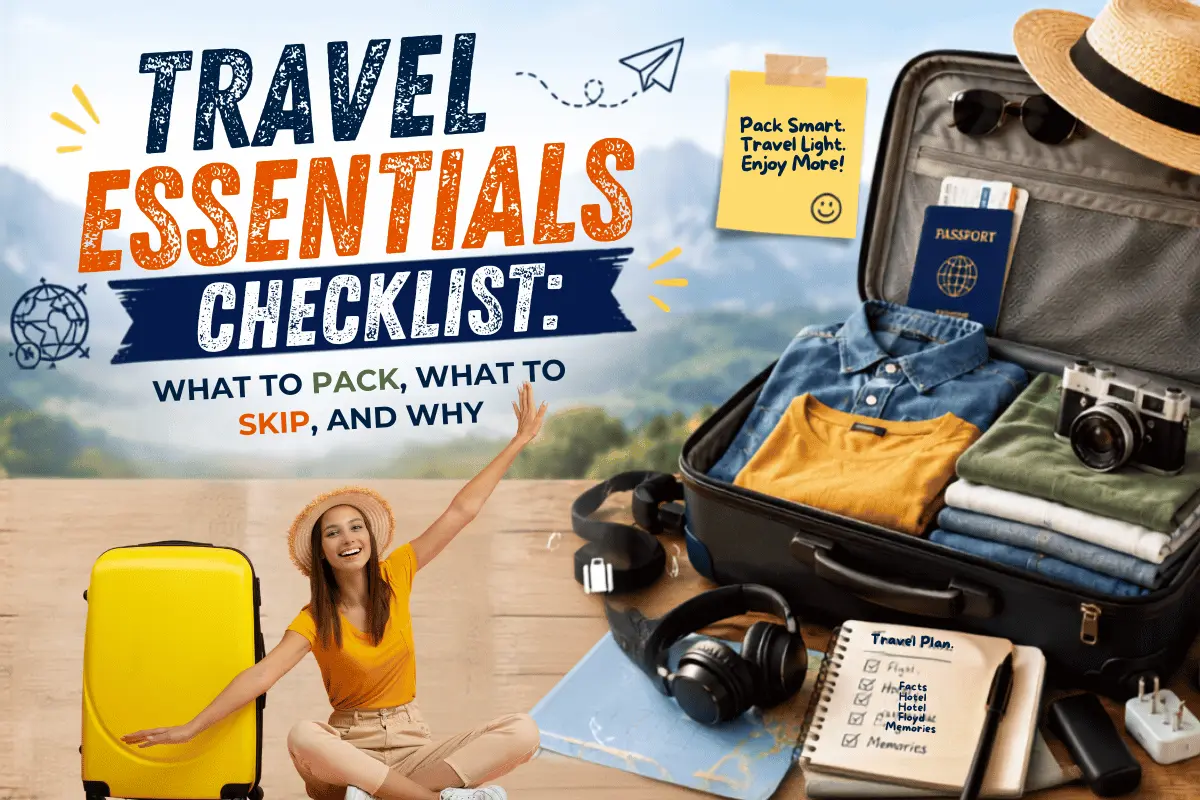
Quick answer : The best Travel Essentials Checklist starts with documents, medication, money, phone power, comfortable walking shoes, weather layers, and a small carry-on backup. Then add only the clothing, toiletries, and gear that match your destination, trip length, and planned activities. This guide covers 75+ essentials for domestic and international travel, plus smart ways to organise a suitcase without overpacking.
Packing should make a trip feel easier before it begins. Yet it is easy to leave it until the night before a flight, when a missing charger, a weather change, or an overfilled suitcase causes unnecessary stress. A practical list protects your time and budget: you are less likely to buy a duplicate at the airport, check an essential item by mistake, or carry clothes that never get worn.
Pack for the itinerary you actually have, not a hypothetical version of the trip. One outfit for a confirmed dinner is useful; three “just in case” outfits are usually just extra weight.
At-a-Glance Travel Essentials Checklist
If you only use one part of this guide, use this list. Keep these items in your personal item or carry-on whenever possible.
- Passport or accepted government photo ID
- Visa, travel authorization, boarding pass, and reservation details where required
- Wallet, payment cards, emergency cash, and travel-insurance information
- Phone, charging cable, wall plug, and power bank
- Prescription medicine in original labeled containers
- Comfortable sneakers or walking shoes
- Weather-appropriate outer layer and a light plane layer
- Underwear, socks, sleepwear, and a change of clothes
- Toiletries, sunscreen, tissues, and hand sanitizer
- Reusable water bottle, snacks, headphones, and downloaded entertainment
Why a Travel Checklist Makes Every Trip Easier
A travel checklist does three jobs: it separates essentials from nice-to-haves, lets you pack in sensible stages, and gives you a final safety check before leaving home. Start a reusable master note on your phone. Duplicate it for every trip and add only destination-specific items, such as a rain jacket, formal outfit, hiking gear, ski layers, or a universal adapter.
Before an international trip, independently verify current passport-validity, visa, entry, health, customs, and medication requirements with official sources for your nationality and destination. Rules change, and an old blog post should never be your final authority. For any flight, also review your airline’s current bag dimensions, weight allowance, and battery policy.
Documents, Money, and Travel Safety Essentials
Store core documents in a slim pouch, wallet, or secure crossbody that stays with you rather than in checked luggage. A thoughtfully sized Marshalls travel purse or crossbody bag can keep your ID, cards, boarding pass, and phone accessible during a busy airport day without adding a bulky extra bag.
- Government-issued photo ID for domestic travel
- Passport for international travel
- Required visa, electronic authorization, or entry documents
- Boarding pass and airline-app access
- Hotel, rental-car, tour, and transport confirmations
- Credit card, debit card, and a small amount of local cash
- Travel-insurance details and emergency-assistance number
- Medical-insurance card, prescription list, and emergency contacts
- Driver’s license and international driving permit when relevant
- Paper and encrypted digital copies of important documents
Keep a copy of your passport information page separate from the original and leave another copy with someone you trust. Avoid displaying your full home address on an exterior luggage tag; a phone number or email is usually enough to help a bag find its way back.
Carry-On Essentials: What Must Stay With You
Your carry-on is your recovery plan if a checked bag is delayed. It should let you communicate, take essential medication, sleep, and manage the first day of your trip.
- Passport, ID, wallet, keys, and all travel documents
- Phone, charger, power bank, headphones, and necessary electronics
- Prescription medication and basic first-aid supplies
- One change of underwear, socks, and a simple top
- Small toiletries bag, lip balm, tissues, and hand sanitizer
- Glasses, contact lenses, and solution as permitted
- Reusable bottle, empty before security, plus snacks for dietary needs
- Light hoodie, scarf, or packable layer
- Neck pillow, eye mask, book, or downloaded entertainment for long travel days
- First-night accommodation address and an offline copy of your itinerary
Carry-on reminder: power banks and spare lithium batteries generally belong in carry-on baggage, not checked luggage. Liquids and screening requirements vary by airport and can change, so verify the current rules with your airline and security authority before departure.
Checked Luggage and Smart Suitcase Organization
Use checked luggage for bulk, not irreplaceable items. Put extra clothes, larger toiletries, shoe bags, weather gear, and activity equipment here. Keep passports, medication, keys, valuables, essential electronics, and batteries with you.
For a pre-trip reset, look for items that solve a real packing problem: a durable weekender, compact suitcase, toiletry case, laundry bag, or packing cubes. Marshalls luggage and travel organizers are natural categories to consider when an old bag has broken wheels or your current setup turns into a jumble. Choose the size and style for your route, not simply the biggest bag available.
Shop luggage and packing organizers
How to pack a suitcase efficiently
- Place shoes along the bottom or edge of the suitcase; wear the bulkiest pair in transit.
- Put denser items near the wheel end so the bag balances when upright.
- Group clothes in packing cubes by category or outfit.
- Fill gaps with socks, soft layers, or a small laundry bag.
- Seal toiletries in a leak-resistant pouch near the top.
- Leave a little room for souvenirs and place dirty clothes in one bag from day one.
Rolling works well for T-shirts, knitwear, and casual pants. Fold structured shirts, dresses, blazers, and wrinkle-prone items. Compression bags can reduce bulk, but they do not reduce weight, so weigh the bag before heading to the airport.
Clothing Essentials: Build a Small Travel Capsule
Choose a limited color palette so most tops work with every bottom. For a typical five- to seven-day trip with laundry access, five to seven tops, two to three bottoms, one or two layers, sleepwear, underwear and socks, and one dressier option is often plenty. Check the forecast five days before departure and again the day before you leave.
| Category | Practical amount for a 5–7 day trip |
|---|---|
| Tops | 5–7 mix-and-match options |
| Bottoms | 2–3 versatile options |
| Layers | 1–2, based on climate |
| Underwear and socks | One per day, plus two backups |
| Sleepwear | 1–2 sets |
| Dressier or activity-specific outfit | 1, when the itinerary needs it |
Travel clothing should earn space through comfort and repeat use. A lightweight jacket that works in rain, wind, and an overly cool cabin is more valuable than several single-purpose layers. Marshalls fashion items for travel, including versatile tops, warm layers, scarves, sunglasses, and swim cover-ups, can help fill genuine gaps in a capsule wardrobe while keeping the overall bag restrained.
Footwear: The Travel Item That Can Make or Break a Day
Prioritize comfort over novelty. Wear your heaviest, most supportive pair while traveling and pack no more than two extra pairs for most trips. Break in shoes before you leave; a vacation is a poor time to discover a rubbing heel or weak arch support.
- Supportive Marshalls sneakers for walking and airport days
- Sandals or flip-flops for warm destinations, pools, and showers
- One polished shoe for business, dinners, or events if needed
- Moisture-wicking socks and one spare pair in the carry-on
- Weather-ready boots only when the forecast and itinerary justify them
Find comfortable travel sneakers
Toiletries, Personal Care, and Fragrance
Use a clear pouch or hanging toiletry bag so small items are visible. Fill travel-size containers with products you already use; a new product that irritates your skin is not a travel upgrade. Keep any carry-on liquids bag easy to reach for screening.
- Toothbrush, toothpaste, floss, and retainer case
- Deodorant, face wash, moisturizer, sunscreen, and lip balm
- Shampoo, conditioner, body wash, hairbrush, ties, and clips
- Makeup, remover, razor, menstrual products, and contact-lens supplies
- Hand cream, anti-chafe product, insect repellent, and stain wipes
- Small laundry detergent or a laundry sheet for longer stays
A familiar scent can be a pleasant finishing touch, but pack fragrance sensibly. A small, well-protected Marshalls perfume or travel-friendly body spray is more practical than a large glass bottle, especially if you are traveling with only a carry-on. Always follow the current liquid limits and airline guidance.
Electronics and Travel Accessories Worth Carrying
- Phone and charger
- Power bank in your carry-on
- Universal plug adapter for international trips
- Laptop, tablet, camera, e-reader, or smartwatch only if you will use it
- Cable organizer, headphones, and Bluetooth luggage tracker
- Reusable water bottle, coffee tumbler, or compact umbrella
- Travel journal and pen
Download maps, tickets, reservations, translation tools, and entertainment before leaving reliable Wi-Fi. Remember that a plug adapter changes plug shape; it does not necessarily convert voltage. Check the label on hair tools and appliances before using them internationally.
Health and Personal Safety Essentials
- Prescription medication, prescription copies, and medical information
- Pain relief or allergy medication you already know is safe for you
- Bandages, blister pads, antiseptic wipes, and motion-sickness support if relevant
- Sunscreen, insect repellent, tissues, and hand sanitizer
- Emergency contact card and travel-insurance information
- Small flashlight for outdoor or road trips
Confirm destination rules for medication before international travel. Keep essential doses labeled and in your personal item. A compact kit is better than a large collection of supplies you do not know how to use.
Packing Lists by Trip Type
Domestic travel
Bring accepted ID, payment cards, medication, charger, a weather-ready clothing capsule, toiletries, and your airline-approved bag. Recheck carrier size and weight limits before leaving.
International travel
Add a valid passport, required visa or authorization, insurance information, document copies, adapter, currency plan, and destination-appropriate clothing. Confirm official entry and health requirements close to departure.
Business travel
Pack a wrinkle-resistant meeting outfit, backup shirt or blouse, polished shoes, laptop charger, presentation materials, and a compact grooming kit. Keep work clothes away from gym gear and liquids.
Beach vacation
Add swimwear, sandals, sun hat, sunglasses, cover-up, sunscreen, reusable bottle, dry bag, and washable tote. A practical Marshalls beach tote or day bag is useful for towels, water, sunscreen, and a change of clothes.
Road trip or family trip
Keep frequently needed items in the cabin: insurance information, car charger, snacks, offline maps, blanket, rain layer, wipes, spare clothes, and a basic emergency kit. Give each child a small day bag, but keep documents and medicine with an adult.
Winter travel
Use layers: base layer, insulating midlayer, and waterproof outer layer. Add a hat, gloves, scarf, warm socks, lip balm, moisturizer, and weather-ready footwear. Wear boots and the heaviest coat while in transit.
Items Travelers Commonly Forget
- Phone charger and wall plug
- Daily medication, glasses, or contact lenses
- Underwear, socks, pajamas, and a rain layer
- Travel adapter, reusable bottle, and headphones
- Luggage tag, laundry bag, and downloaded documents
- House keys, parking details, pet-care instructions, and emergency contacts
Set a small “leave-the-house tray” near the door for passport or ID, wallet, keys, phone, charger, and glasses. It is simple, and it prevents the most frustrating last-minute search.
A Practical Packing Timeline
Two weeks before: check passport validity, entry rules, medication needs, major weather patterns, and special activities. Replace only items that genuinely need replacing, such as worn walking shoes or a broken travel bag.
One week before: write the itinerary by day and build outfits around it. Confirm accommodation amenities so you do not pack a hair dryer, towels, or other items already provided.
Two to three days before: wash travel clothes, charge electronics, download maps, and pack non-daily items. The night before, add daily toiletries, medication, glasses, wallet, and phone charger. On departure morning, use the tray and do one slow final check.
Frequently Asked Questions
What should I pack for domestic travel?
Pack accepted photo ID, payment cards, phone and charger, medication, a weather-appropriate clothing capsule, toiletries, and carry-on essentials. Confirm your airline’s latest bag-size rules before departure.
What should I pack for international travel?
Add a valid passport, any required visa or travel authorization, insurance information, document copies, adapter, and destination-specific health or clothing items. Verify entry rules directly with official sources.
What should go in my carry-on?
Keep documents, medication, valuables, electronics, power bank, a change of clothes, small toiletries, snacks, and a light layer in your carry-on.
How many outfits should I pack for a week?
Use a mix-and-match capsule rather than seven complete outfits. Five to seven tops, two to three bottoms, one or two layers, and limited shoes is a sensible starting point when laundry is available.
Should I roll or fold clothes for travel?
Roll soft casual clothing to save space and use cubes for organization. Fold structured or wrinkle-prone garments more carefully.
What travel essentials are worth buying?
Useful purchases solve a specific issue: comfortable sneakers, durable luggage, packing cubes, a toiletry bag, cable organizer, reusable bottles, and a weather layer. Browse practical Marshalls travel essentials for a targeted pre-trip refresh, then choose only items your itinerary will use.
Shop travel-ready Marshalls finds
Final Travel Packing Check
Before checking a suitcase, remove your passport, wallet, medication, keys, electronics, and power bank. Photograph the bag and its contents, confirm its weight, and make sure the tag has safe contact information. At security, keep liquids and electronics easy to reach and follow the instructions at that checkpoint.
The goal is not a perfect suitcase or a long shopping list. It is to arrive with the things that protect your comfort, time, and ability to handle a change of plans. Save this checklist, refine it after each trip, and packing will get easier every time.